

From Charity To The Maple Syrup Business - What Athletes Do In The Off-Season
While some may envision athletes spending their off-time lounging on tropical beaches, the reality is quite different.
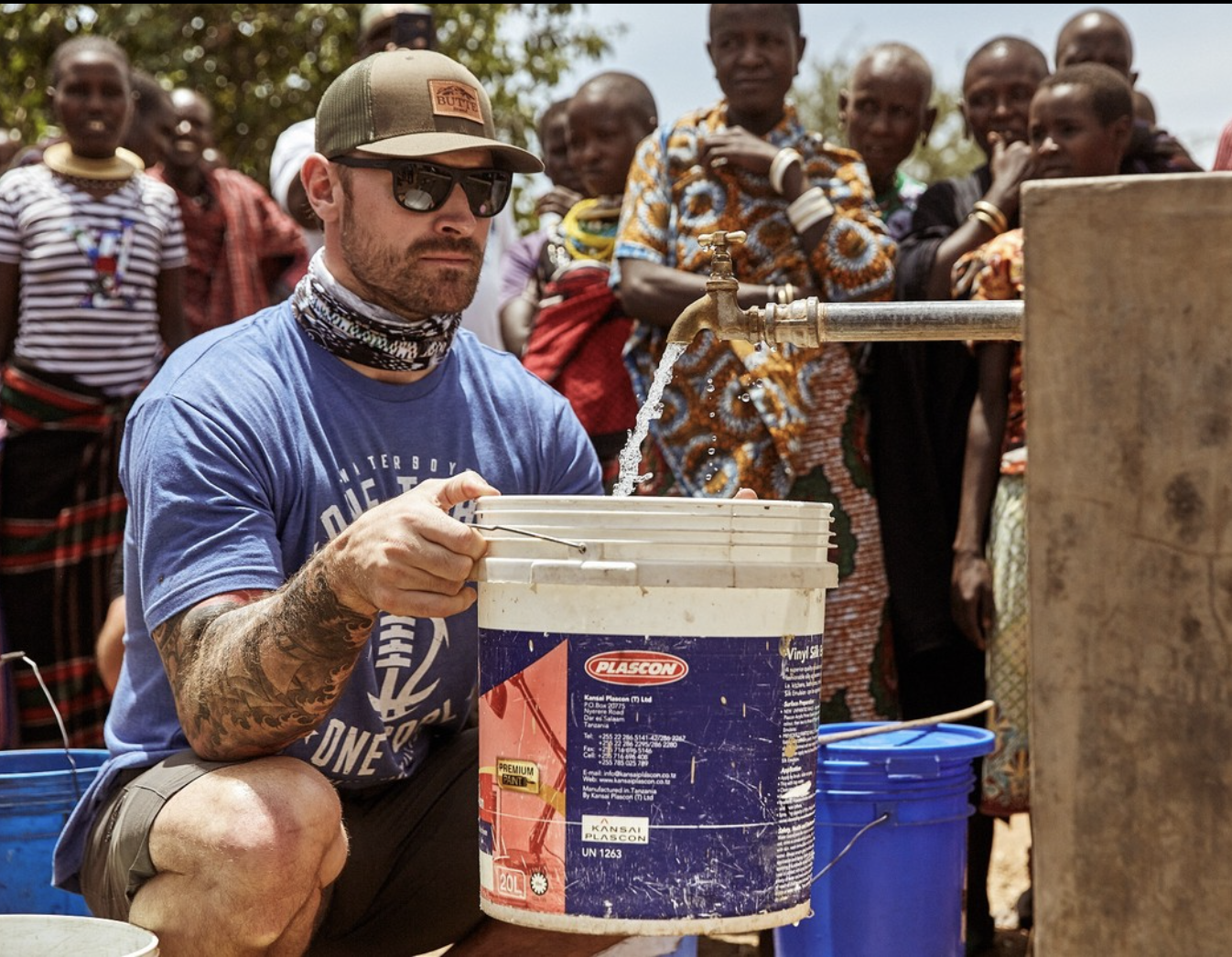
Photo: Instagram/waterboysorg
The off-season is crucial for athletes to recover, rejuvenate and prepare for the next competitive season. While some may envision athletes spending their off-time lounging on tropical beaches, the reality is quite different.
WNBA and Overseas Leagues
Most WNBA (Women's National Basketball Association) players utilize the off-season to make money to supplement their regular season salaries. Sure, they also develop their skills and gain valuable experience by playing in other leagues overseas, but the wear and tear on their bodies make it a challenge. Look no further than Brittany Griner to see that other challenges are presented beyond physical deterioration.
European Soccer
European soccer leagues are known for their relentless schedule, with matches occurring throughout the year. While there might not be a traditional off-season, players often have short breaks between seasons or international competitions to recharge and spend time with their families.
Minor League Baseball
Minor League Baseball players hoping to make it to the big leagues (MLB - Major League Baseball) face unique challenges during the off-season due to their lower salaries. The recent, and first of its kind, collective bargaining agreement (CBA) has set the wages higher, but still challenging considering the players are in-season from February until typically September and training to make a big league team in between.
Minor League Salaries per the CBA:
• Complex league: from $4,800 per year up to $19,800
• Low-A: $11,000 to $26,200
• High-A: $11,000 to $27,300
• AA: $13,800 to $30,250
• AAA: $17,500 to $35,800
To make ends meet and continue pursuing their dreams, players engage in activities like coaching youth camps, providing private instruction, selling real estate, or even working in construction.
Athletes' Training Regimens
Many professional athletes remain dedicated to their training routines even during the off-season. LeBron James, for instance, invests a substantial amount, approximately $1.5M per year, to stay in peak physical condition. He employs cutting-edge technologies like cryotherapy and hyperbaric chambers and surrounds himself with a team of professionals, including a personal chef, masseuse and trainer.
Off-Field Contributions
Many athletes, like Chris Long, extend their impact beyond the field during the off-season. Chris Long, a philanthropist and two-time Super Bowl champion, founded the Waterboys organization to address the global water crisis. Through partnerships, like recruiting his teammates, and other initiatives, the organization has aided over 500,000 people in need.
Olympians' Diverse Pursuits
Olympic athletes face unique circumstances, as they often do not receive direct payment for their participation unless they win a medal. However, they have diverse off-season activities that contribute to their personal and professional growth. For instance, Hilary Knight, a celebrated women's hockey player, competes at the Olympic level and plays in the PWHPA (Professional Women's Hockey Players Association), working towards building a sustainable women's hockey league. Additionally, athletes like Ryan Cochran-Siegle, Nina Roth, Vicky Wright and Tabitha Peterson juggle their athletic pursuits with careers in fields like maple syrup farming, nursing and pharmacy.
Behind The Scenes Of Life As A Minor League Baseball Player
For minor leaguers, it’s not all chartered jets and big paychecks. The love for the game, hard work and a little luck is what it takes to be called up.

Photo credit: instagram.com/j.titus
While the Los Angeles Dodgers are vying for the World Series Championship, ever wonder the path the players take to make it to the big leagues? We did. Meet Jimmy Titus. He’s like any other 20-something guy but when he wakes up, he exudes baseball excellence. We first met Jimmy back July though “Adopt A Minor Leaguer,” a non-profit set up to support minor leaguers, which has become essential during the COVID-19 cancelled season. We were matched up with Jimmy, who has been in the Los Angeles Dodgers minor league system since he was drafted in the 22nd round in 2019.
Jimmy is wise beyond his years, coaching in the Manchester Eagles of the Connecticut Collegiate Baseball League during this unscheduled off-time. He’s coaching college players who are a few years younger than him, but lucky for them, this two-time Gatorade High School Player of the Year is up to date on the technology compared to older coaches and is relaying everything he knows. On top of all that, he is finishing up his final year of college at Bryant University with an Economics major and a Finance minor.
We were so curious about Jimmy’s time in baseball and he graciously sat down with us and let us pick his brain, because like you, we’re also curious about the behind the scenes. Life as a Minor Leaguer is not nearly as glamorous as the major leaguers who are making millions, traveling on chartered jets and staying in five-star hotels. Here’s what he had to say.
Last Night’s Game: Let’s talk about the season that wasn’t. I’m going to start with the question most people are thinking...if/how are you getting paid with the season being cancelled?
Jimmy Titus: We're getting paid more often but we haven't gotten paid as much as we would. I would probably be making almost twice as much as I make right now than the $400 that I get every week. It's still something, especially for someone like me who lives at home during all this. I don't have any expenses.
LNG: I know they publicized the David Price deal - that he was going to send everybody a check. Did you get that? (Background: Dodgers pitcher David Price gave $1,000 to every minor leaguer in the Dodgers’ system when the season was cancelled, even though he never threw a pitch for the Dodgers because he signed with the team before the season started).
JT: Yes. Basically, we heard about it almost 10 days before it broke to the media. He was adamant about the fact he didn't want any credit for it. He didn't want it to be brought up. He just wanted to do out of the goodness of his heart. We heard the news and then it finally broke. Then two days later, I got an email that I needed to submit my information for so they could get it to me. It showed up literally direct deposited in my checking account. I was like, "Wow." It was basically a month and half's worth of pay for us. It was very much appreciated.
LNG: That's pretty cool. He didn't even really want it out there, but of course, it's going to break. JT: Exactly. Especially since he never even played (with the team). I thought that was a pretty significant gesture for 220 minor league players. It's crazy.
LNG: 220? That's -
JT: - some serious money.
LNG: Absolutely, and he's not even getting a paycheck now (because he withdrew from the season for COVID related reasons).
LNG: Are there minor league guys staying ready in case a bunch of people do test positive from what you've heard?
JT: Yes. What they're doing is they have a 40-man roster, which is the major league guys who are getting paid major league money (at least the minimum). Then there's a 20-man taxi squad which is guys who are Triple-A ready or right on the cusp of being ready for the major leagues. Then there are also some guys like me, draft guys. There's a couple of players from my draft class who may not be totally ready to go, but they're getting that extra treatment, I guess you could say, which makes sense. They have a lot of money invested in those guys. They might as well get the best out of them. They're technically ready to go whenever. I forget where they're staying. I think the University of Southern California. I think that's where the Dodgers have their taxi squad ready to go.
LNG: Are they all together quarantined and ready to go?
JT: Yes they are.
LNG: What does the next season look like for you?
JT: I was supposed to be in class A in Michigan this year, Great Lakes to start the year. We never know. Hopefully, I can start there, or even in Rancho, that'd be ideal for next year, just because I'm a year older, but I'm also a year better, even though I didn't play. As long as I keep being better, that’s what matters most. As much as I want everyone to succeed around me, I have to care about myself first and just try to be better than the competition.
LNG: Do you think that your injury changed your perspective on things like a weird blessing in disguise in a way?
JT: Oh, yes, for sure. I've said this a few times to the people who have asked. I looked at the game a lot differently. I went from obviously playing every day to having to watch. Luckily for me, I've always been good enough to not ever really have to watch. I was always the one playing. Getting a different perspective, understanding the game more, understanding my body more too, because once I started doing rehab and stuff, I figured out things about the way that I moved, that I didn't know before that made it easier to transition into the next year and just be as good as I could be. Then obviously taking that, understanding my movement patterns by myself and then going to the Dodgers where they can tell you every single thing you've ever wanted to know about movement ever. As much as I want to say, yes, I wish that I didn’t get hurt, so I could have drafted possibly higher for more money, I would much rather be with the Dodgers now than be with any other team.
LNG: How are the Dodgers helping you stay in shape in the off-season?
JT: The Dodgers are smart when it comes to performance and what it takes for the performance to actually work. This is for the offseason as well as in season, where it is even more important. They're bought into making sure that we're fed, we have a chef that travels with us and cooks food for us, and they’re making sure that we're recovering correctly. It's more the intangible stuff rather than just how we're performing. It's definitely good. Since I have been home, we have kept in constant contact on the strength and conditioning side to make sure that I am staying on top of my game.
LNG: It's a first-class organization.
JT: No doubt.
LNG: I imagine most teams don't have that all the way down through the minor league system do they?
JT: No. Especially, when I played rookie ball last year. You wouldn't really expect that. Maybe in Triple A (the minor league team that’s the last step before being named to a major league roster) you'd expect that from a typical organization. There are stories about my friends (on other teams) eating PB&Js for every single meal.
LNG: Now that you’re done coaching (a side gig picked up during the pandemic), are you getting ready for fall league (an instructional league)? Are you still scheduled to go?
JT: Yes. Instructional league would normally be at the end of August, beginning of September and that would run through the middle of September. We haven't heard anything about that. The way the Dodgers operate they're not going to tell you the day before that you got to pack up your stuff. They'll give you a heads up well in advance. Everyone else that I've talked to from other organizations they don't know either. It's basically just been a big waiting game, but I don't think anything is going to happen this year.
I think they're just going to keep us training and stuff like that and stay in shape. If you come back as good as you were before then that's fine. If you come back better, then that's even better. There will be some guys in some organizations that didn't take advantage of the time and got worse.
LNG: Absolutely. You mentioned the organization uses a lot of technology when it comes to its players and that’s helped you while coaching. Can you tell me more about that?
JT: The Dodgers are good about that stuff relaying it to us. They have a lot of data and video analysis of our play. Doing the analytics and data is something that I actually would want to do after I'm done playing, I would want to work directly with the players. My dream job outside of playing would actually be to work with Dodgers as a hitting coordinator.
LNG: Just stay in the organization and maybe culture, something?
JT: Yes. Well, because I understand like the analytics portion, I understand what they're trying to tell me without them having to really dumb it down, and I think that is a testament to me going to school and understanding the statistics, and even stuff that isn't necessarily stuff that directly translates. I'm an economics major and a finance minor. I have a good understanding of numbers, I guess you could say, in a very broad sense. Just the way that they can relay it to the players,
I find that very interesting. Then during the whole coaching thing and giving lessons and stuff, that's been something that's opened up a passion that I didn't know that I had.
LNG: This has been so interesting. Thank you for giving us an insight into your world and the work that goes on behind the scenes from a player perspective. As always, we’re rooting for you.
JT: Thank you so much.
You can follow Jimmy and his journey to the big leagues on Instagram @j.titus and of course the Dodgers at @Dodgers.